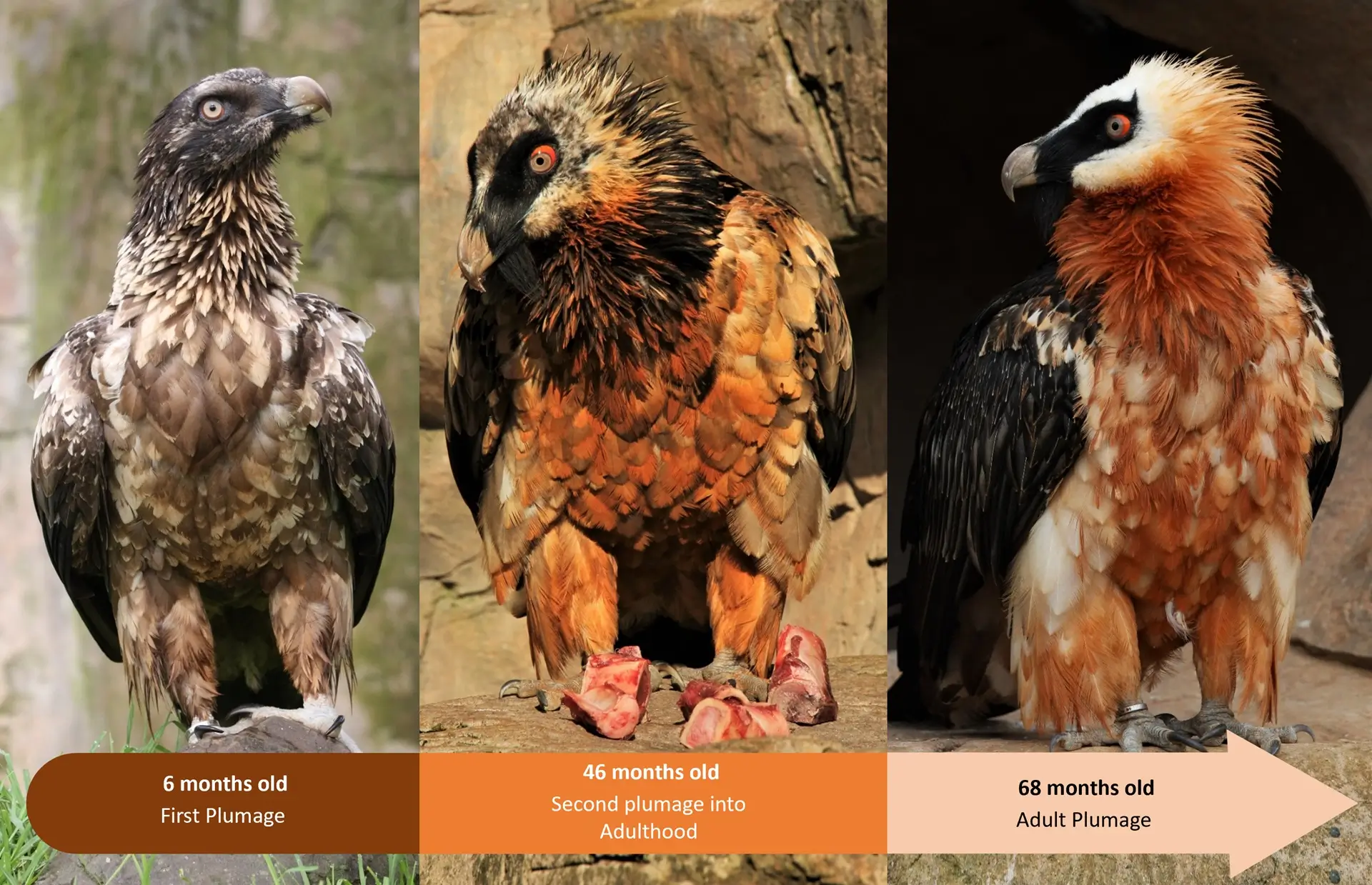
Phase two, into which the programme is currently moving, facilitates the maturing and pairing of the programme birds in the formal breeding station over a period of seven to ten years. Likely age-similar individuals are paired into micro-environment breeding chambers that will become their permanent homes. It is hoped that from here eggs will be laid and nestlings hatched to release to supplement the dwindling wild population. Until such time research, education and awareness campaigns must run concurrently to prepare safe areas for reintroduction and to further mitigate long-term threats to the species.



Project Phase 2 – Maturing to Pair

HAVE YOU HEARD
the Call of the Wild?
Join our
cross-border, cross-cultural
conservation programme
as we stand together
to prevent the extinction
of the magnificent
bearded vulture.
OUR PARTNERS